About The Study
Below is a story to show your child to help explain the study

Text version of the story
The full text of the story shown above, for anyone using a screen reader.
Story page 1 of 22
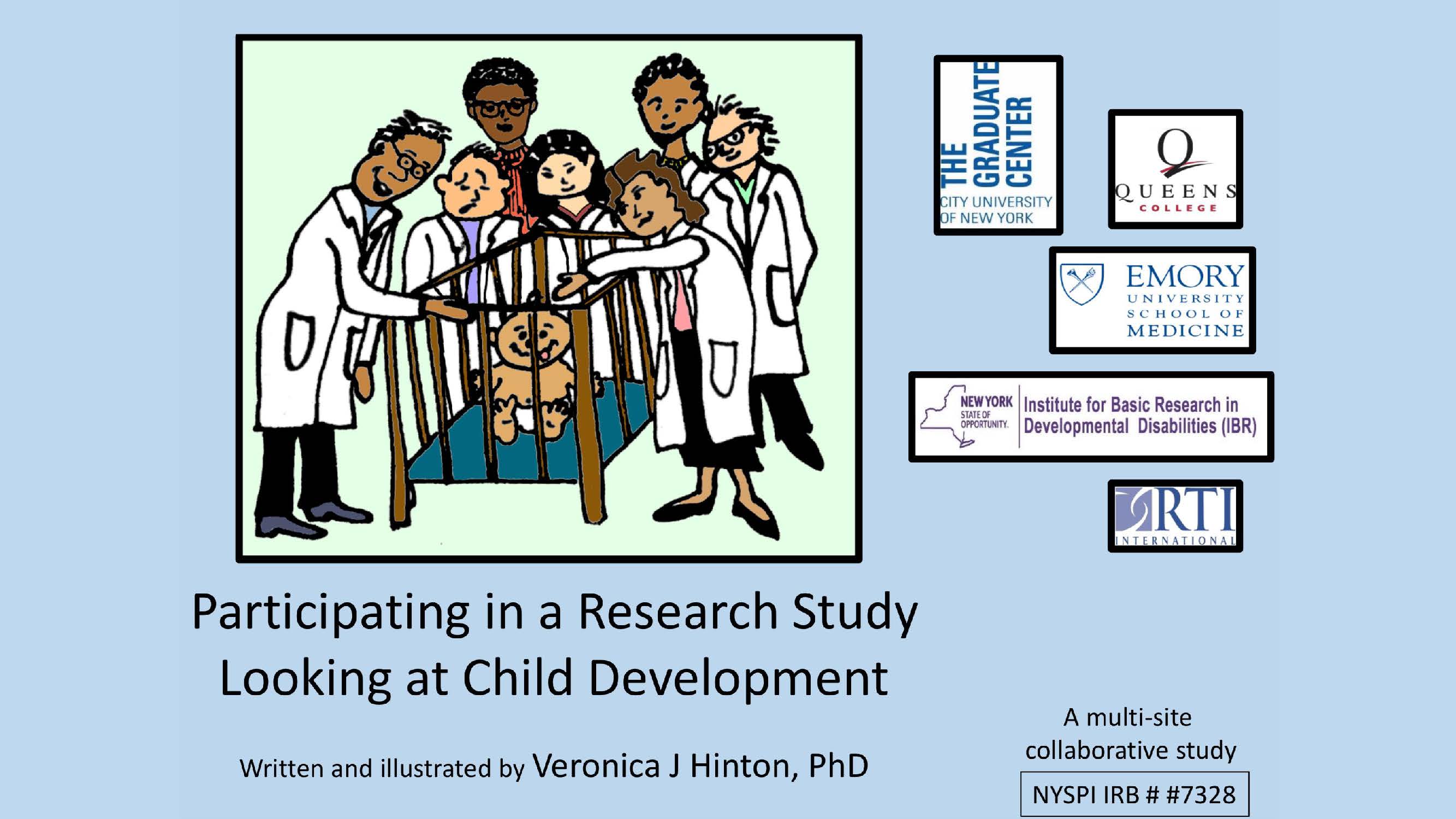
Participating in a Research Study Looking at Child Development. A multi-site collaborative study. The Nathan Kline Institute for Psychiatric Research #7328. Written and illustrated by Veronica J. Hinton, PhD.
Story page 2 of 22
Multiple Principal Investigators: Tatyana Adayev, PhD; Emily Graves Allen, PhD; Veronica J. Hinton, PhD; Jessica Hunter, PhD. Senior Consultants: Sarah Nolin, PhD; Stephanie Sherman, PhD. NYS Institute for Basic Research: Nicole Tortora, Anne Glicksman, Tatanya Adeyev. Emory University: Lisa Shubeck. Graduate Center and Queens College, City University of New York: Rachel Goldman, Amanda Kenepp, Natalie Nagpal, Shira Russell Giller, Sonia Seehra, Shantal Taveras, Ariel Zucker. This study is funded by NIH grant 1 R01 HD091202-01A1.
Story page 3 of 22
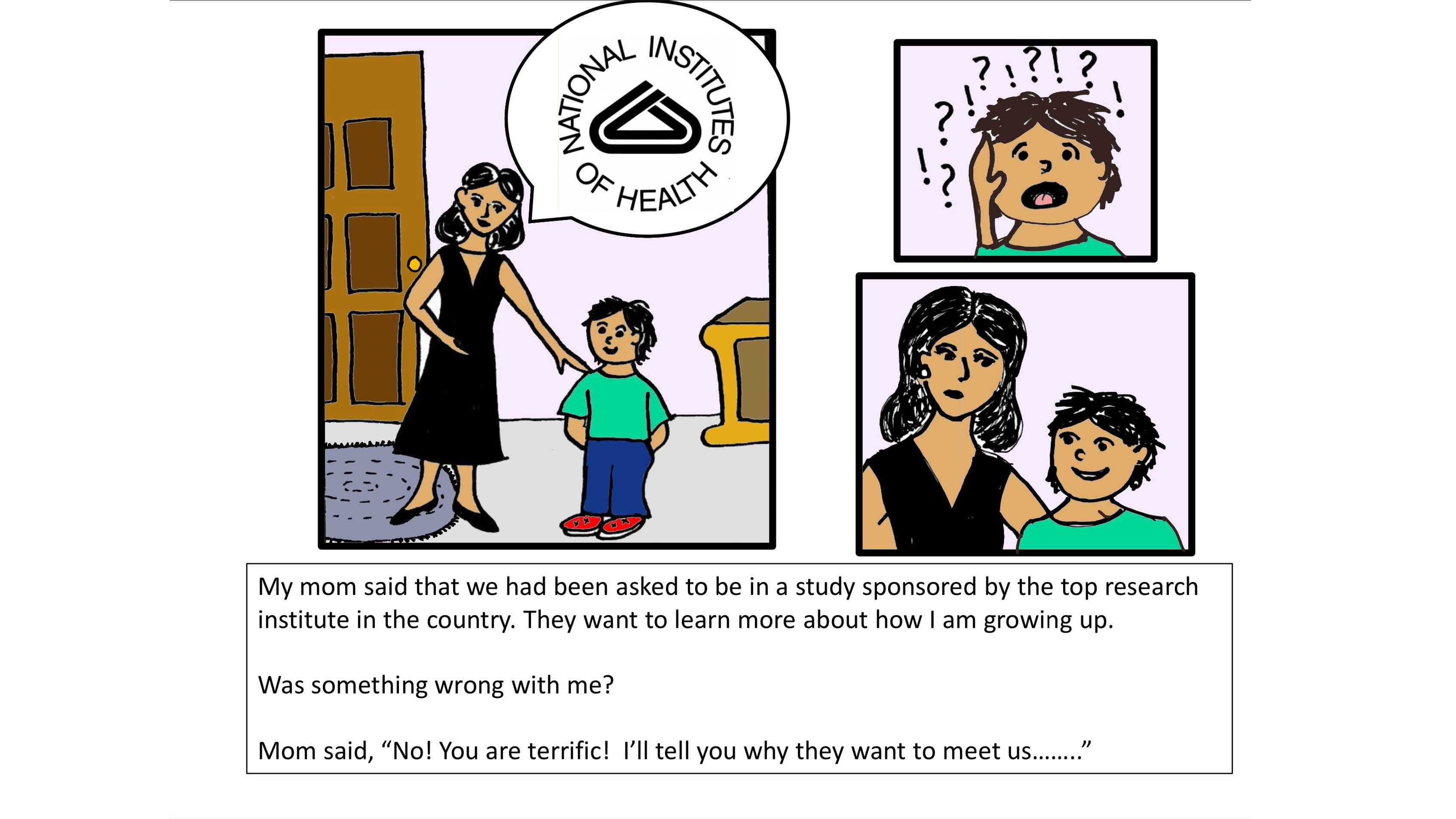
My mom said that we had been asked to be in a study sponsored by the top research institute in the country. They want to learn more about how I am growing up. Was something wrong with me? Mom said, “No! You are terrific! I’ll tell you why they want to meet us…”
Story page 4 of 22
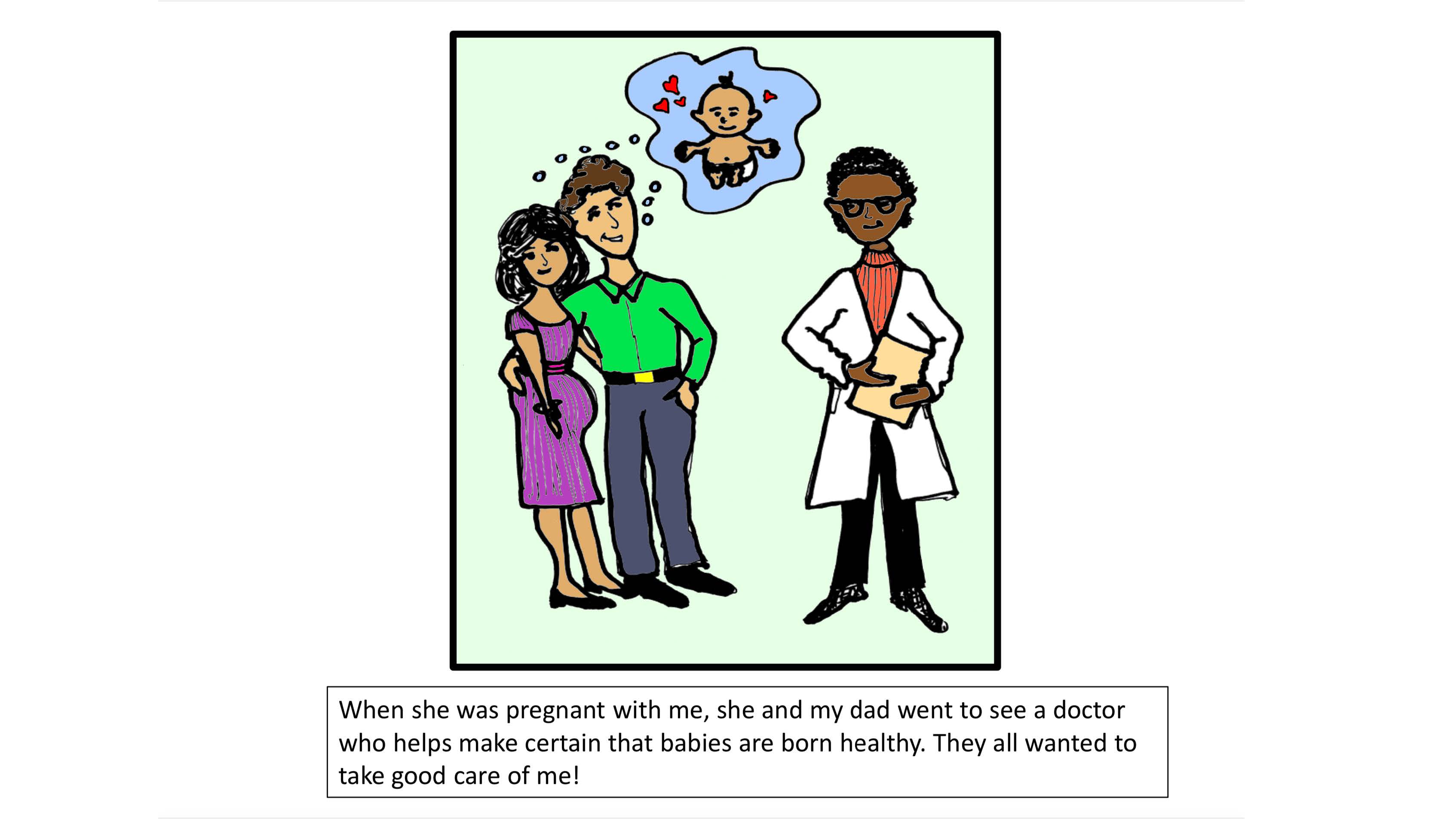
When she was pregnant with me, she and my dad went to see a doctor who helps make certain that babies are born healthy. They all wanted to take good care of me!
Story page 5 of 22
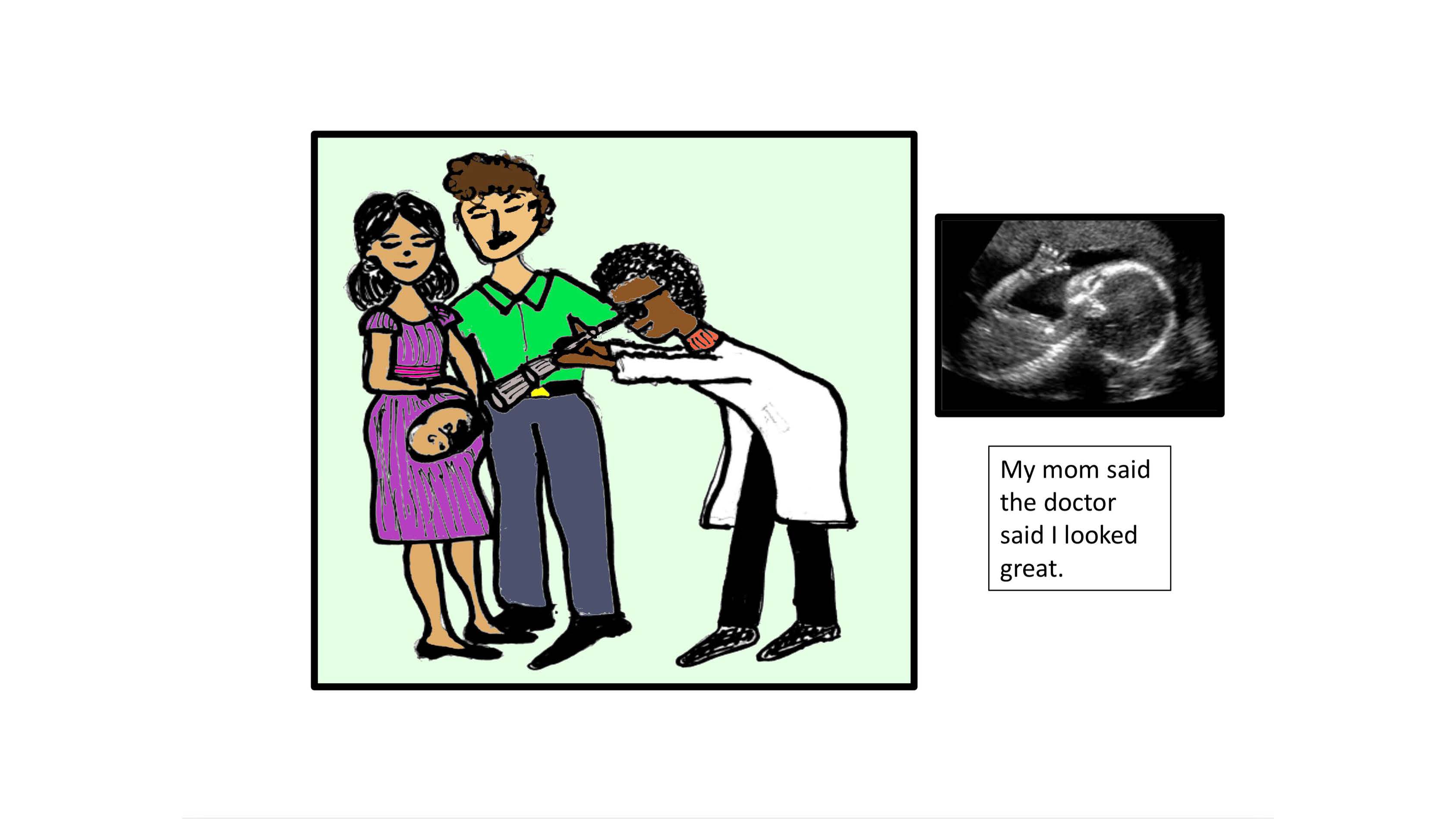
My mom said the doctor said I looked great.
Story page 6 of 22
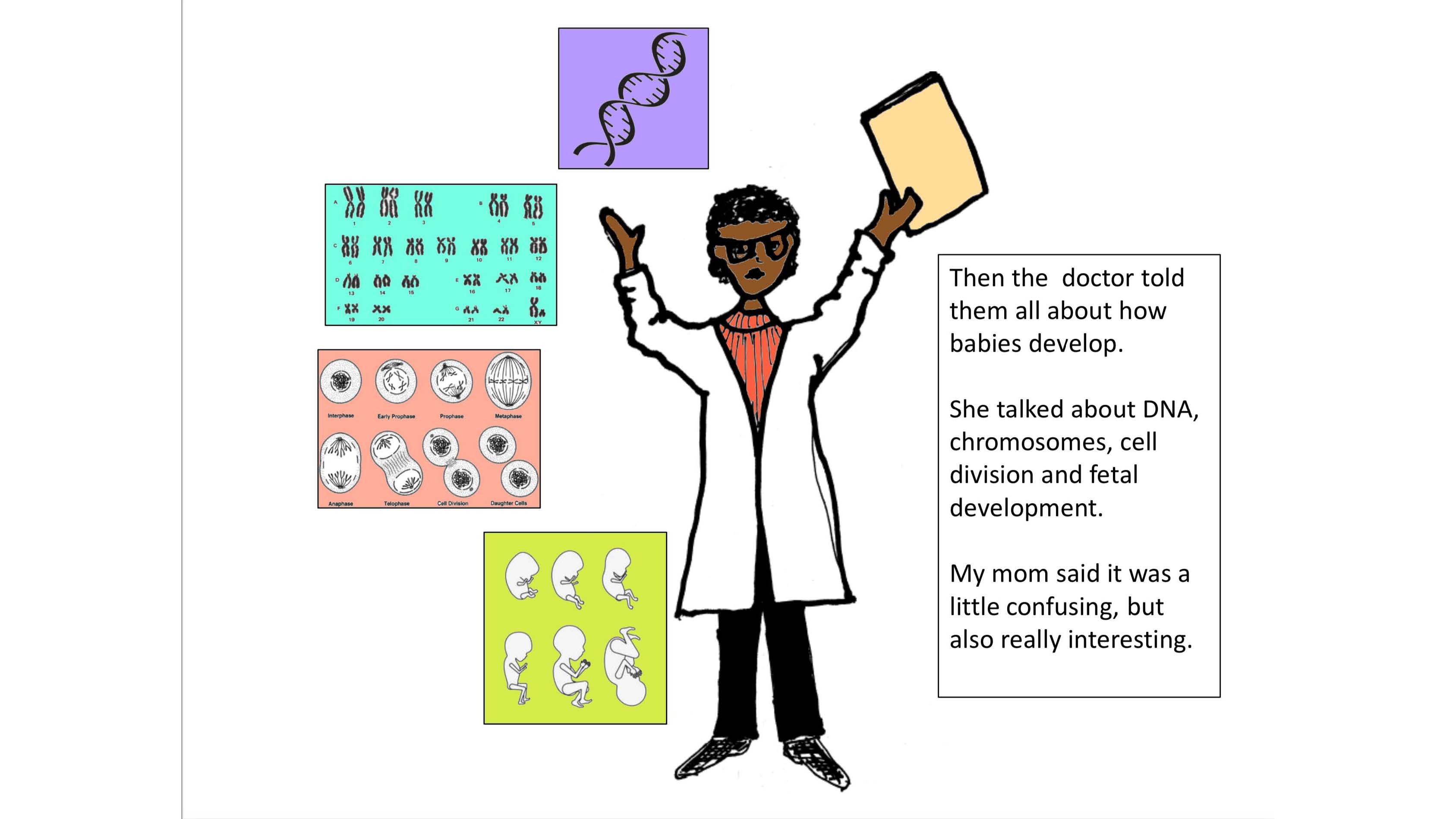
Then the doctor told them all about how babies develop. She talked about DNA, chromosomes, cell division and fetal development. My mom said it was a little confusing, but also really interesting.
Story page 7 of 22
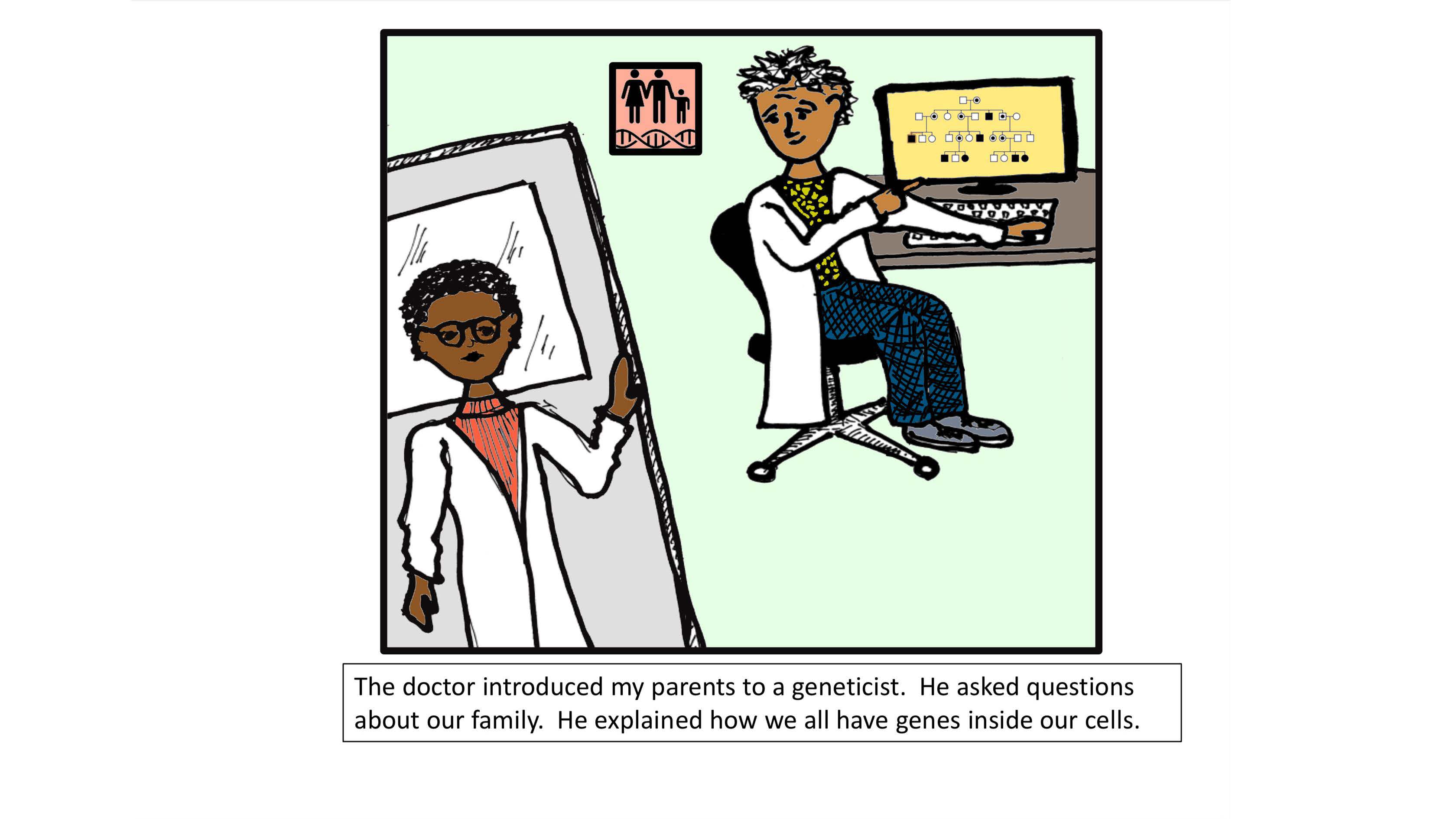
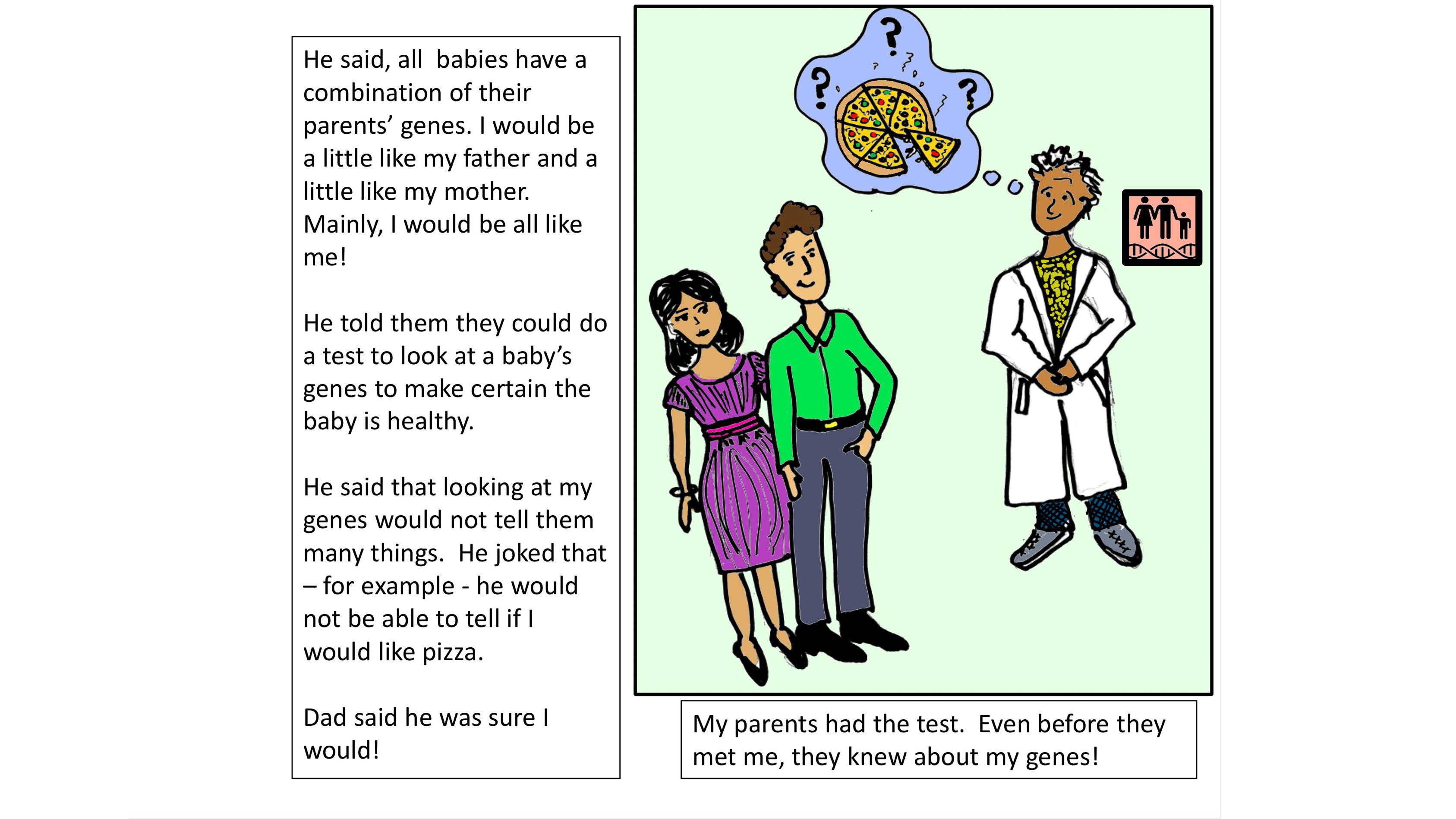
The doctor introduced my parents to a geneticist. He asked questions about our family. He explained how we all have genes inside our cells.
Story page 8 of 22
He said all babies have a combination of their parents’ genes. I would be a little like my father and a little like my mother. Mainly, I would be all like me! He told them they could do a test to look at a baby’s genes to make certain the baby is healthy. He said that looking at my genes would not tell them many things. He joked that — for example — he would not be able to tell if I would like pizza. Dad said he was sure I would! My parents had the test. Even before they met me, they knew about my genes!
Story page 9 of 22
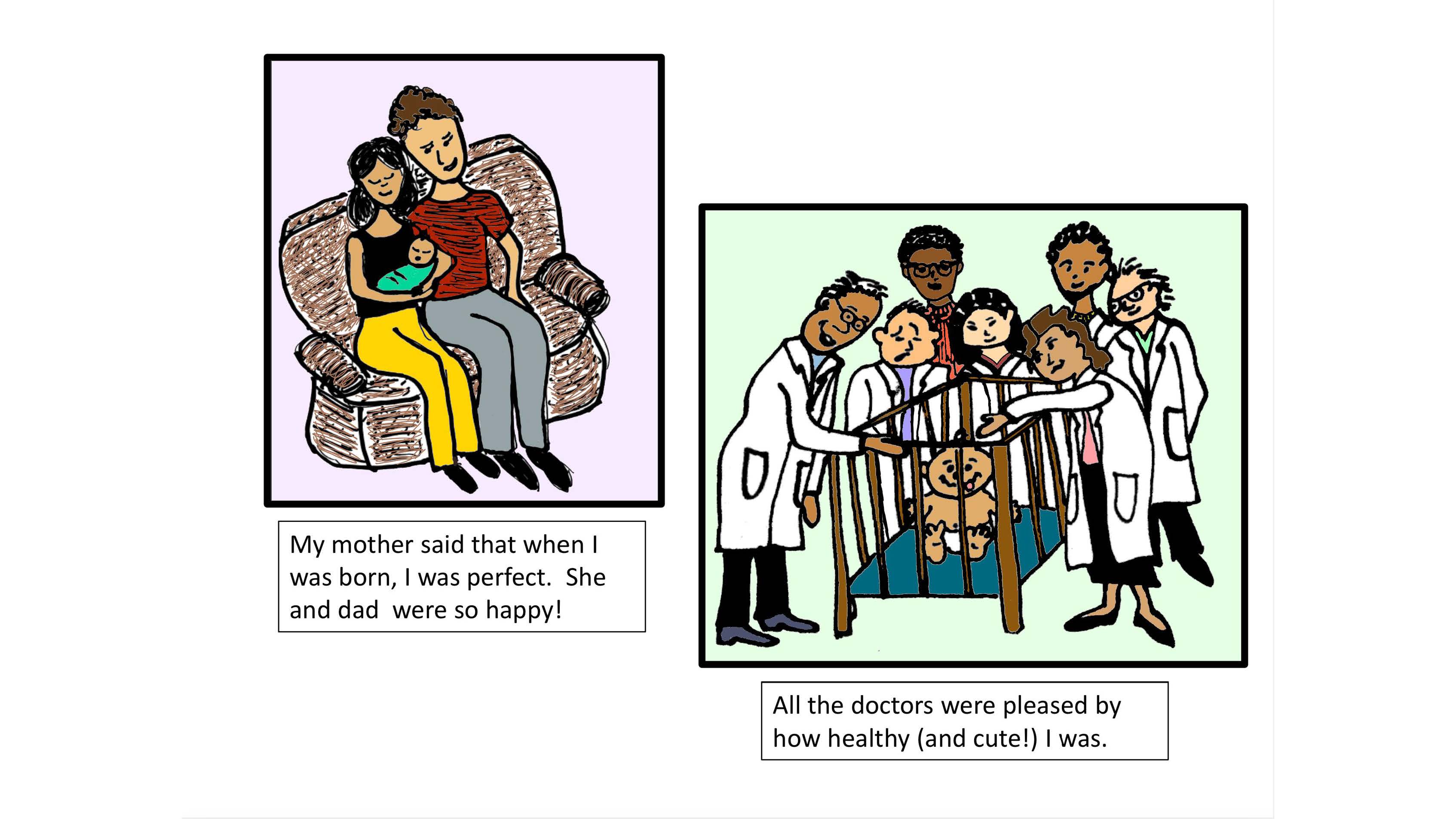
My mother said that when I was born, I was perfect. She and dad were so happy! All the doctors were pleased by how healthy (and cute!) I was.
Story page 10 of 22
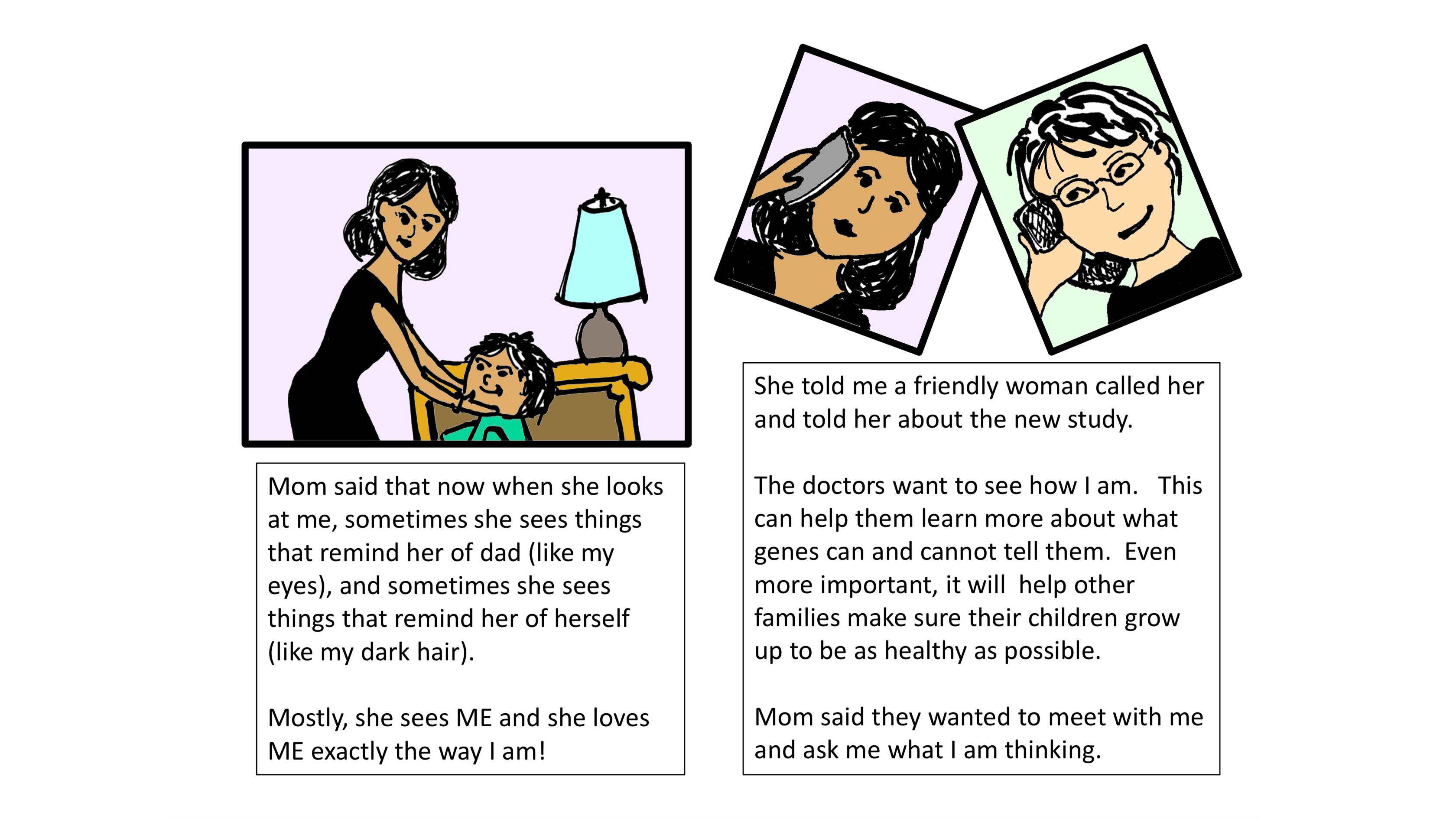
Mom said that now when she looks at me, sometimes she sees things that remind her of dad (like my eyes), and sometimes she sees things that remind her of herself (like my dark hair). Mostly, she sees ME and she loves ME exactly the way I am! She told me a friendly woman called her and told her about the new study. The doctors want to see how I am. This can help them learn more about what genes can and cannot tell them. Even more important, it will help other families make sure their children grow up to be as healthy as possible. Mom said they wanted to meet with me and ask me what I am thinking.
Story page 11 of 22
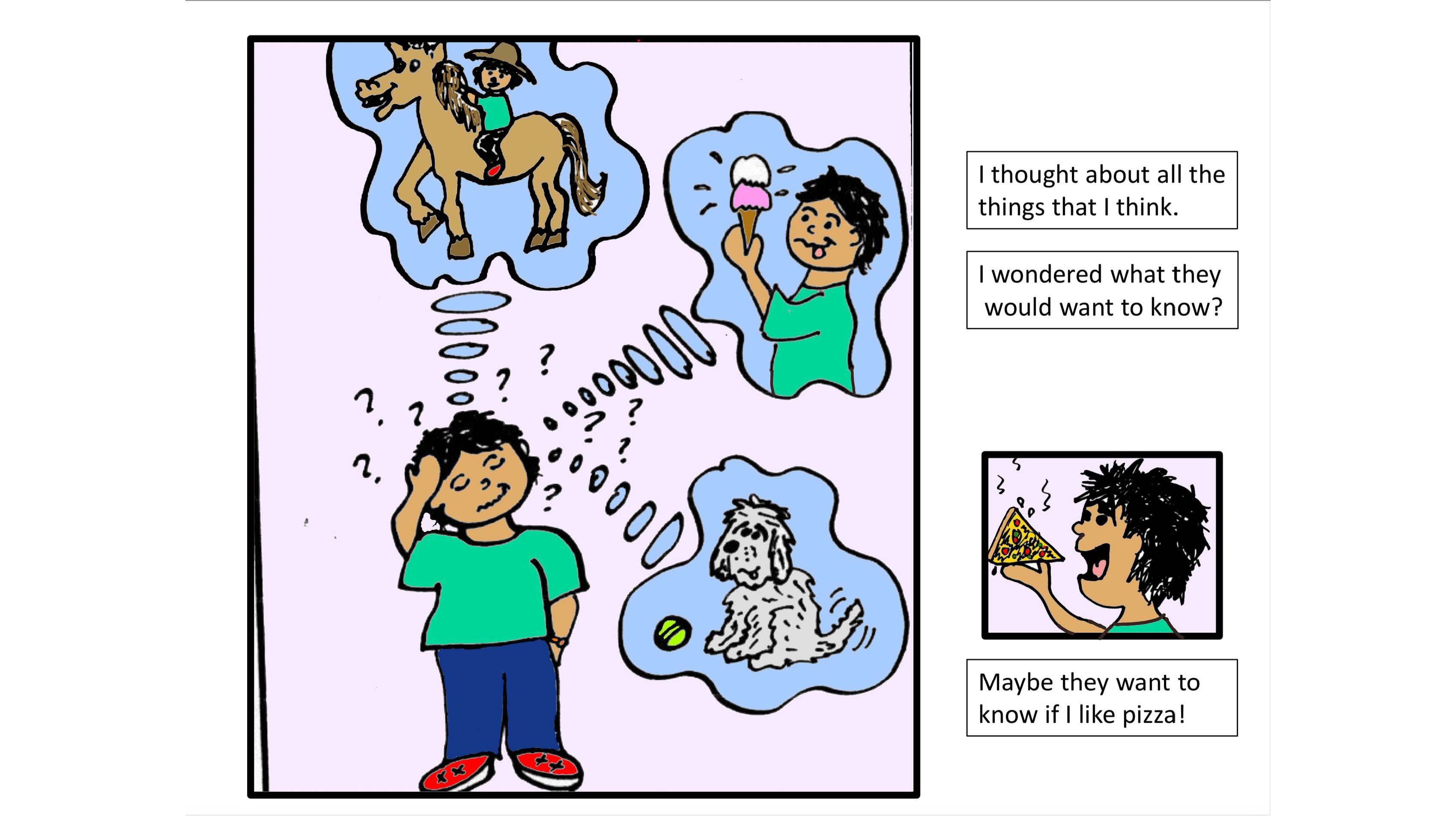
I thought about all the things that I think. I wondered what they would want to know? Maybe they want to know if I like pizza!
Story page 12 of 22
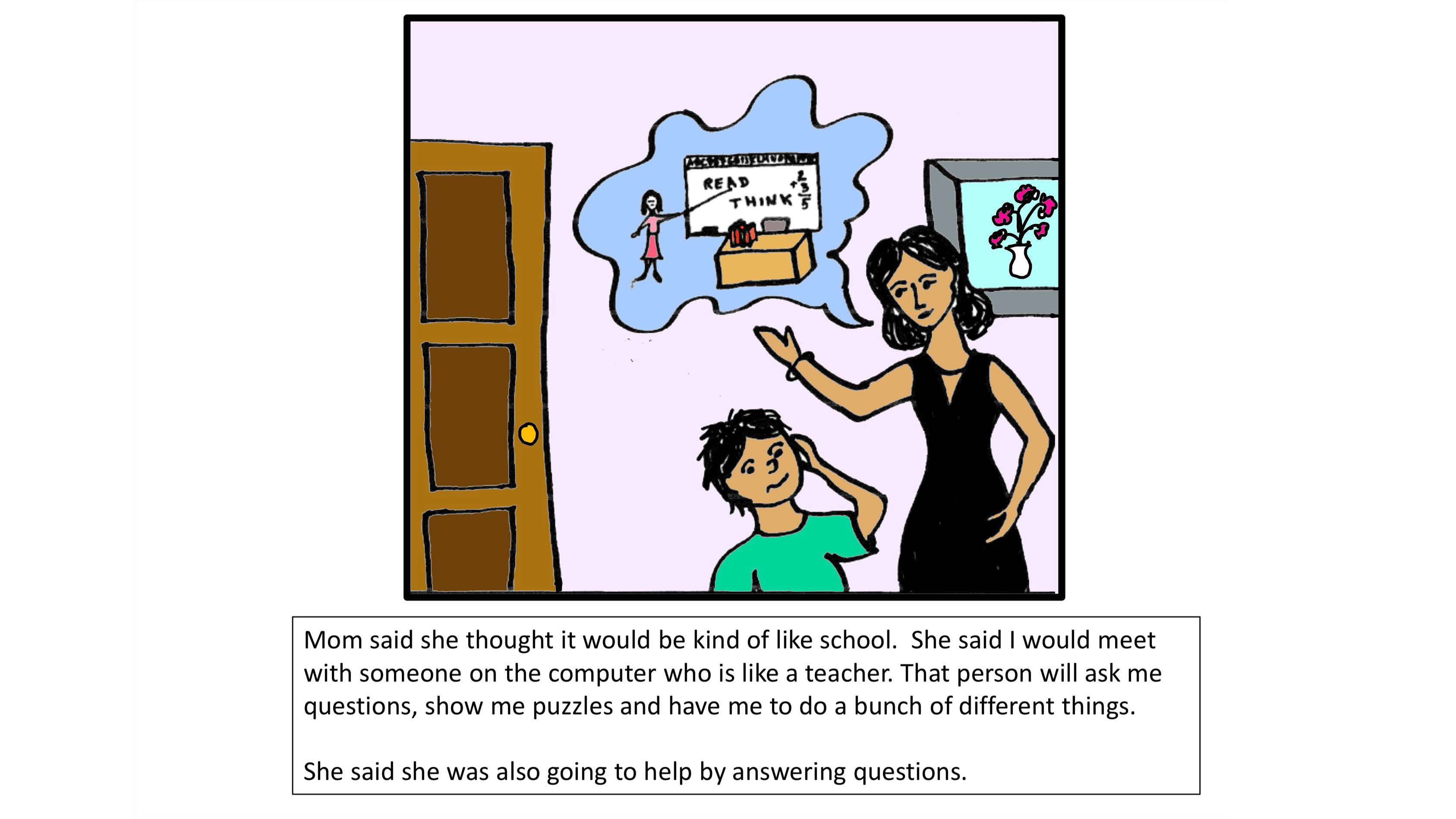
Mom said she thought it would be kind of like school. She said I would meet with someone on the computer who is like a teacher. That person will ask me questions, show me puzzles and have me do a bunch of different things. She said she was also going to help by answering questions.
Story page 13 of 22
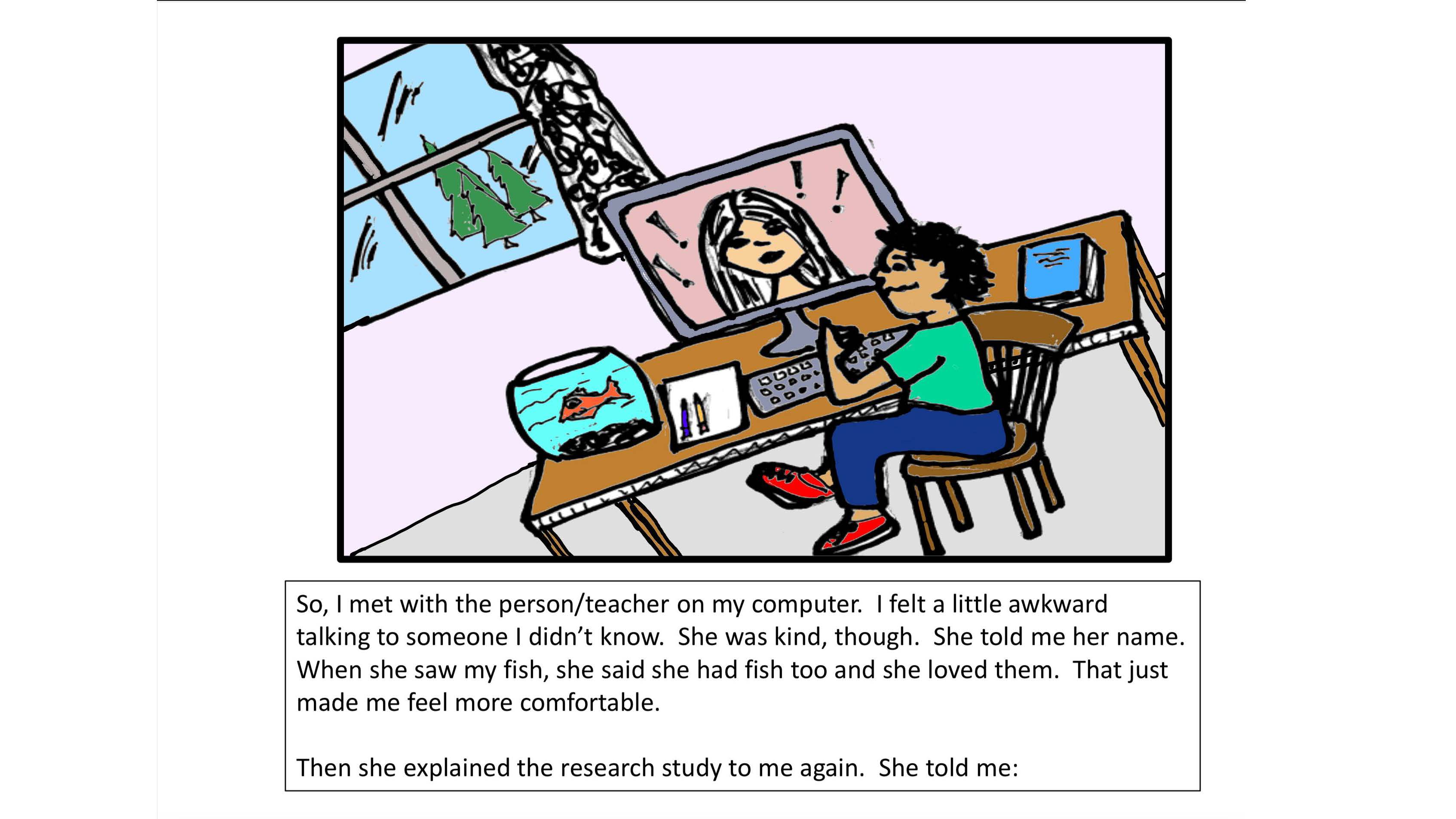
So, I met with the person/teacher on my computer. I felt a little awkward talking to someone I didn’t know. She was kind, though. She told me her name. When she saw my fish, she said she had fish too and she loved them. That just made me feel more comfortable. Then she explained the research study to me again. She told me:
Story page 14 of 22
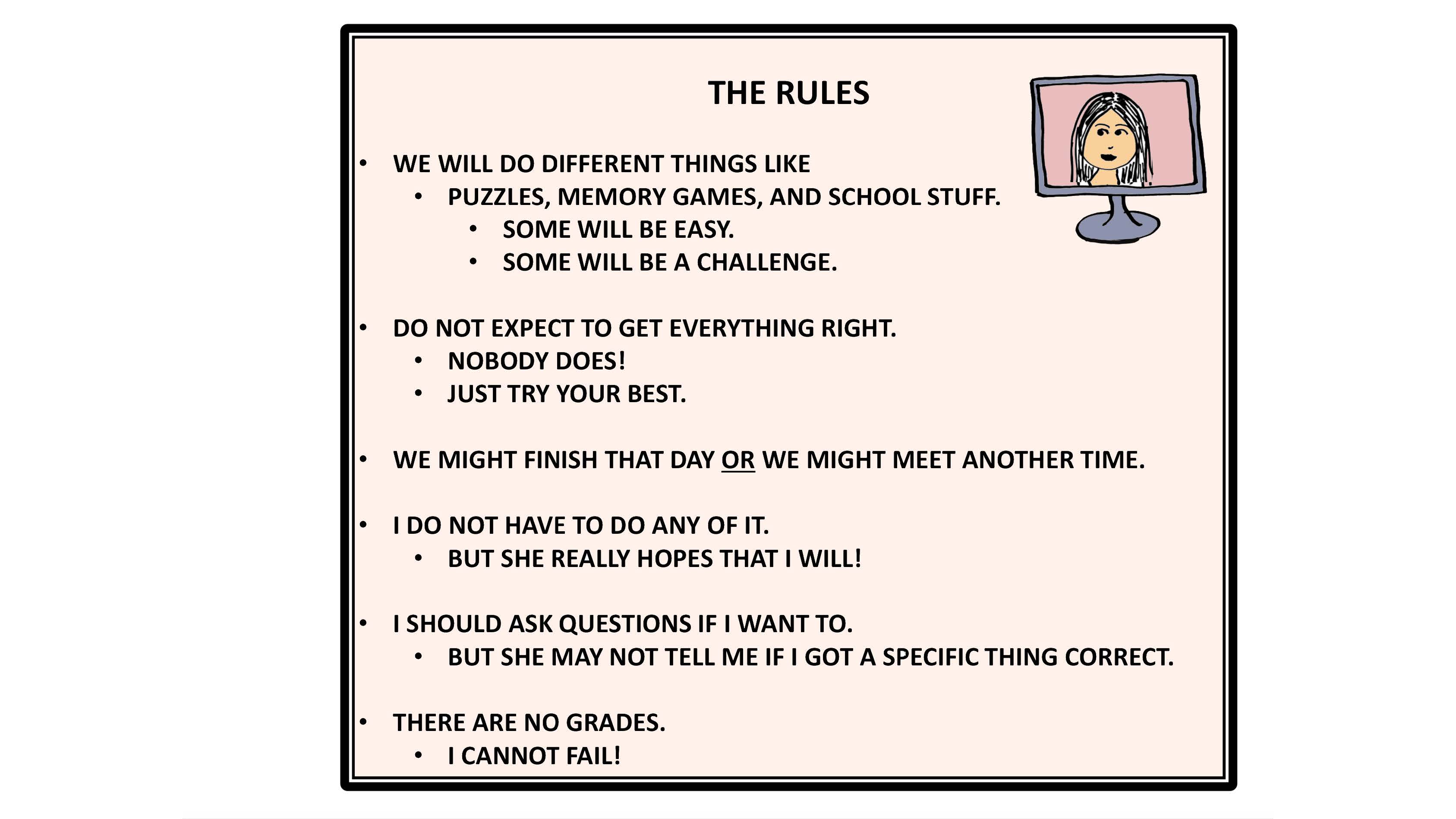
The rules. We will do different things like puzzles, memory games, and school stuff. Some will be easy. Some will be a challenge. Do not expect to get everything right — nobody does! Just try your best. We might finish that day or we might meet another time. I do not have to do any of it, but she really hopes that I will! I should ask questions if I want to, but she may not tell me if I got a specific thing correct. There are no grades — I cannot fail!
Story page 15 of 22
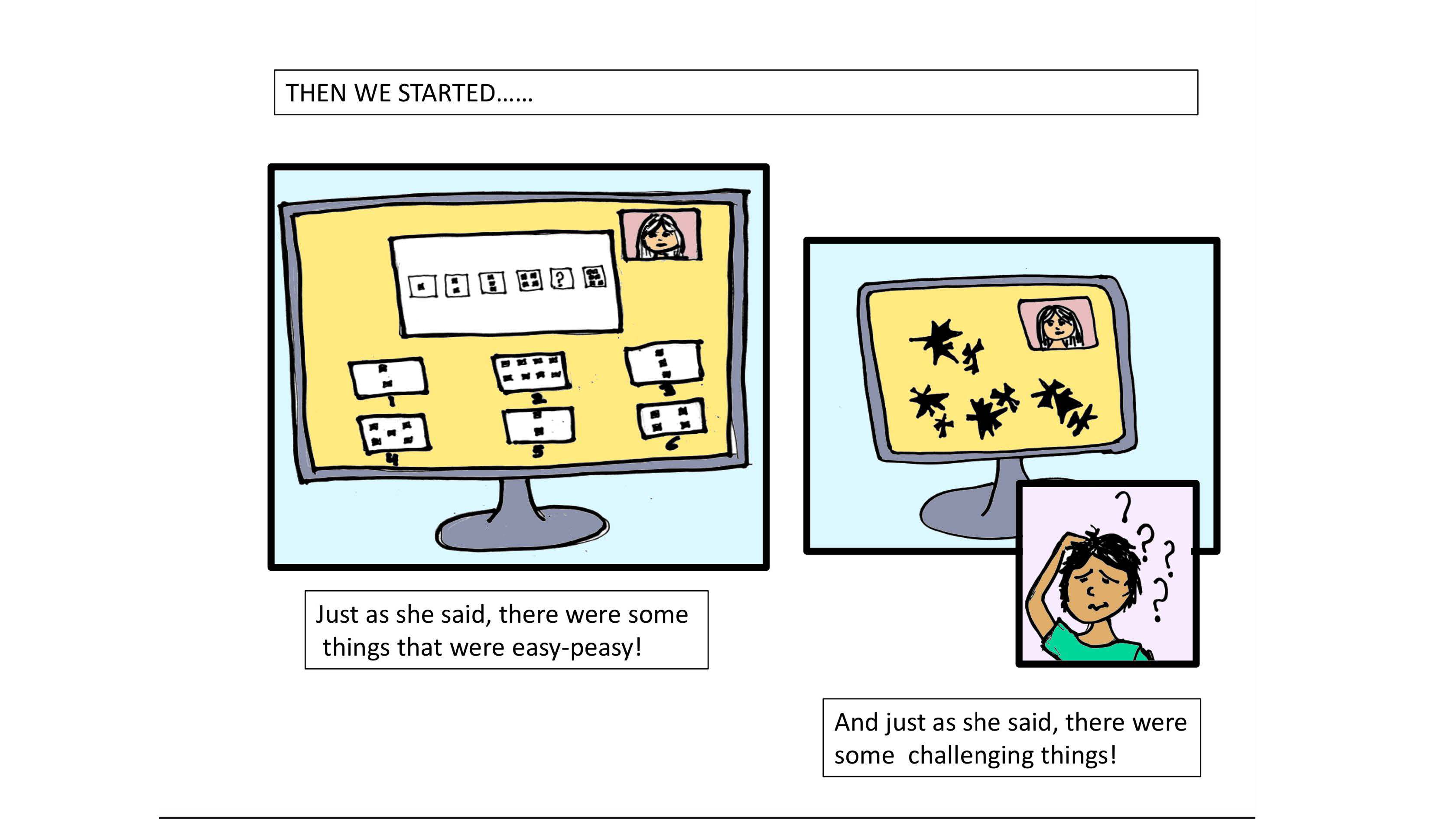
Just as she said, there were some things that were easy-peasy! And just as she said, there were some challenging things!
Story page 16 of 22
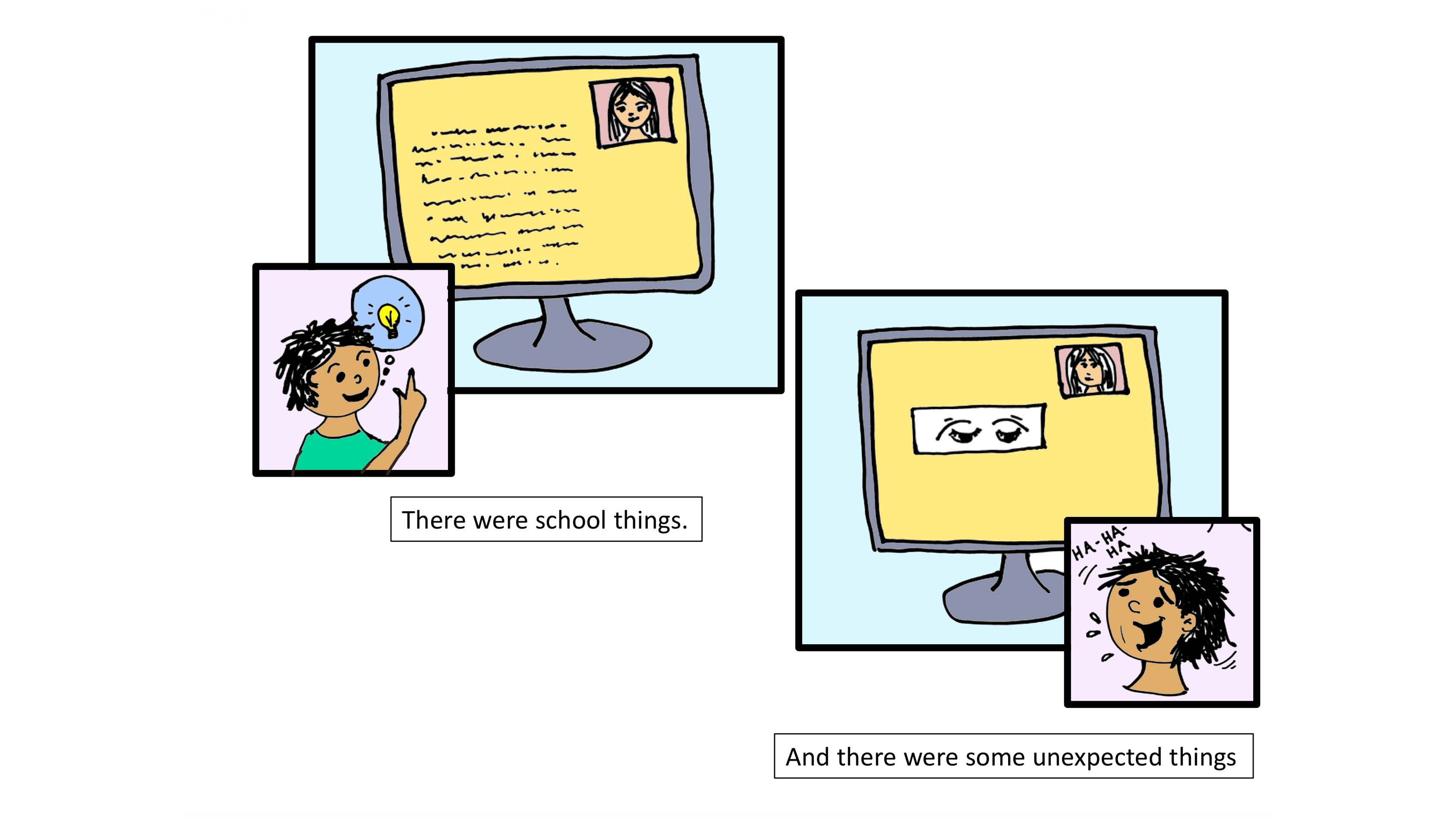
There were school things. And there were some unexpected things.
Story page 17 of 22
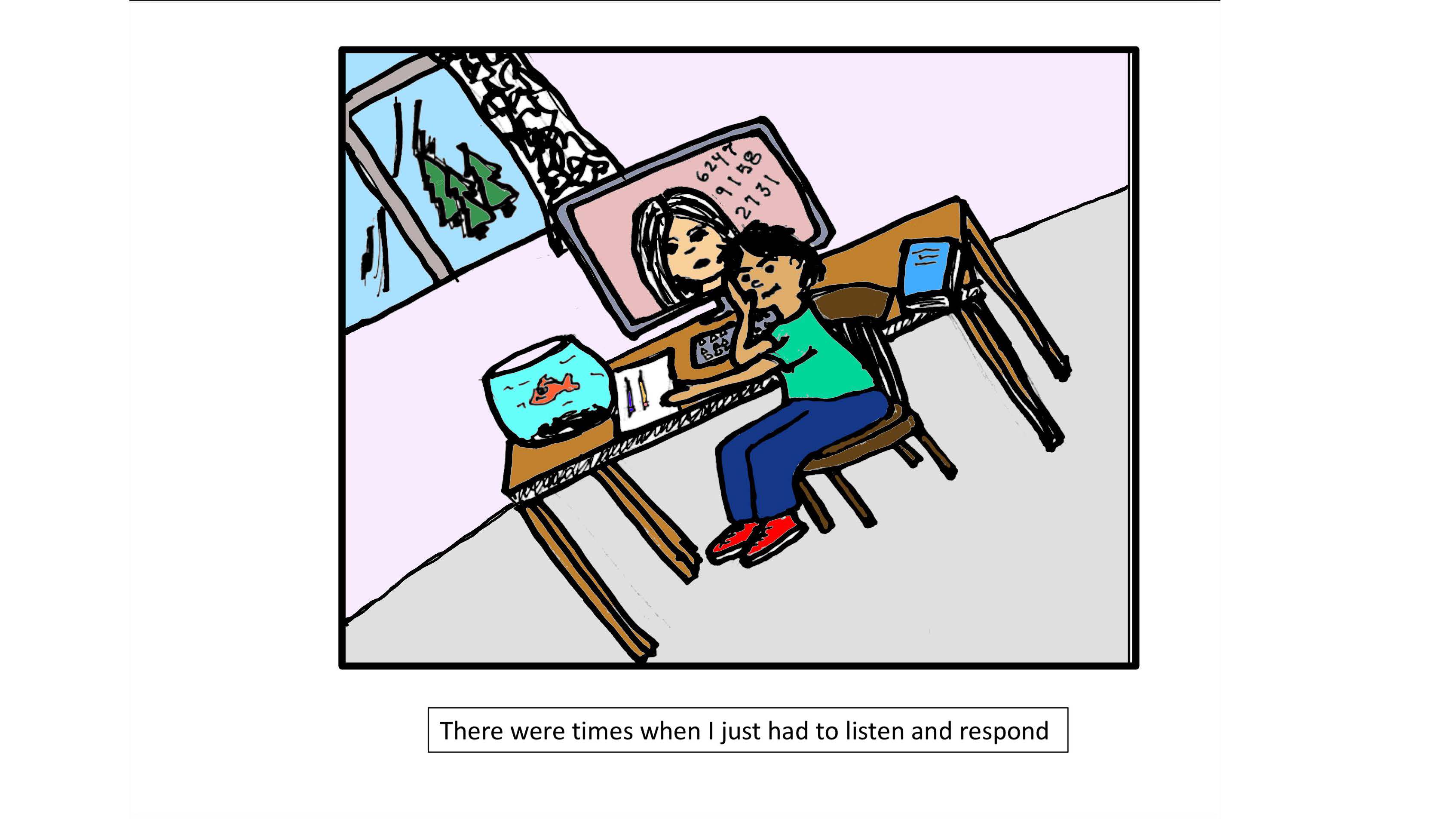
There were times when I just had to listen and respond.
Story page 18 of 22
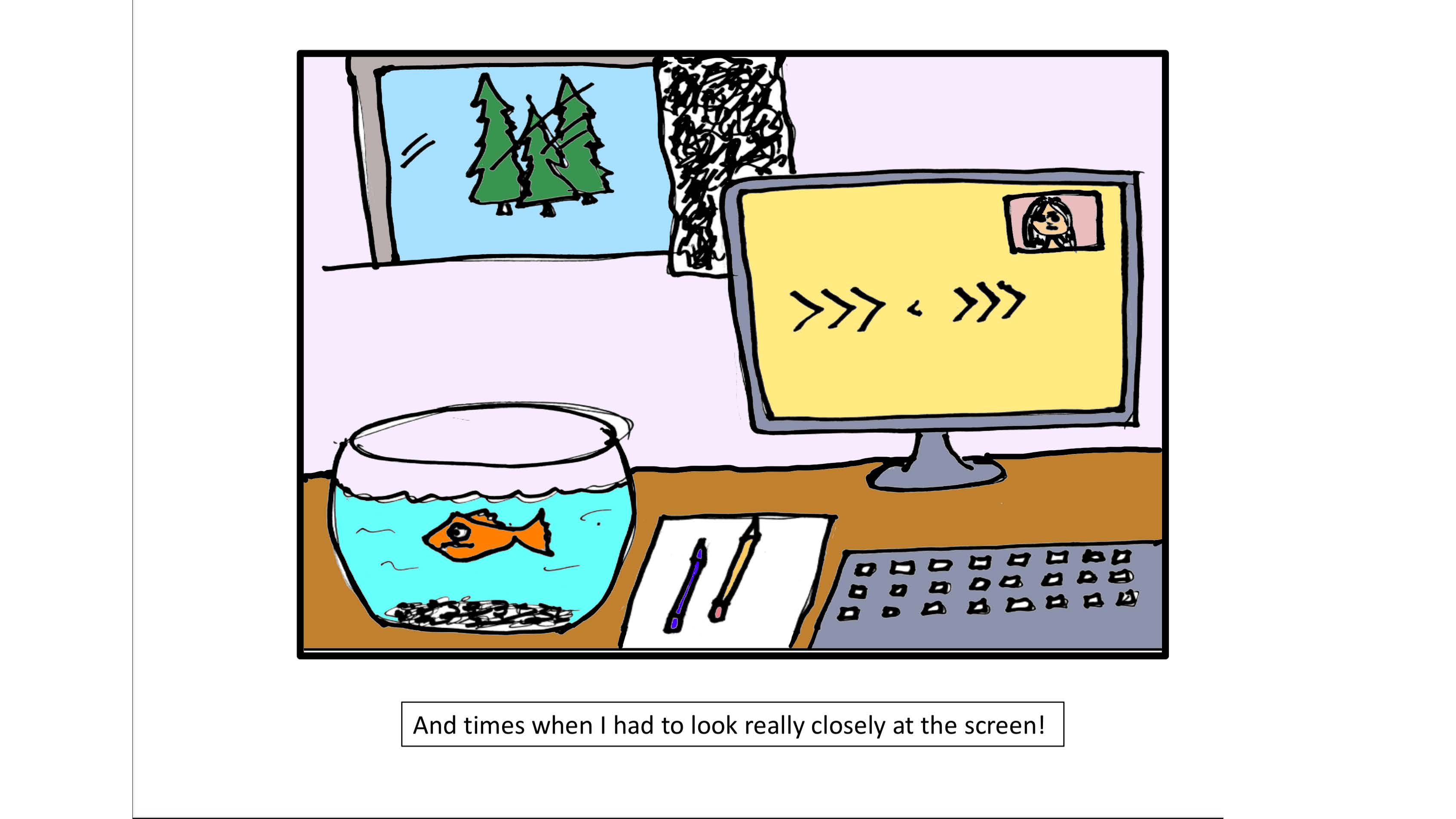
And times when I had to look really closely at the screen!
Story page 19 of 22
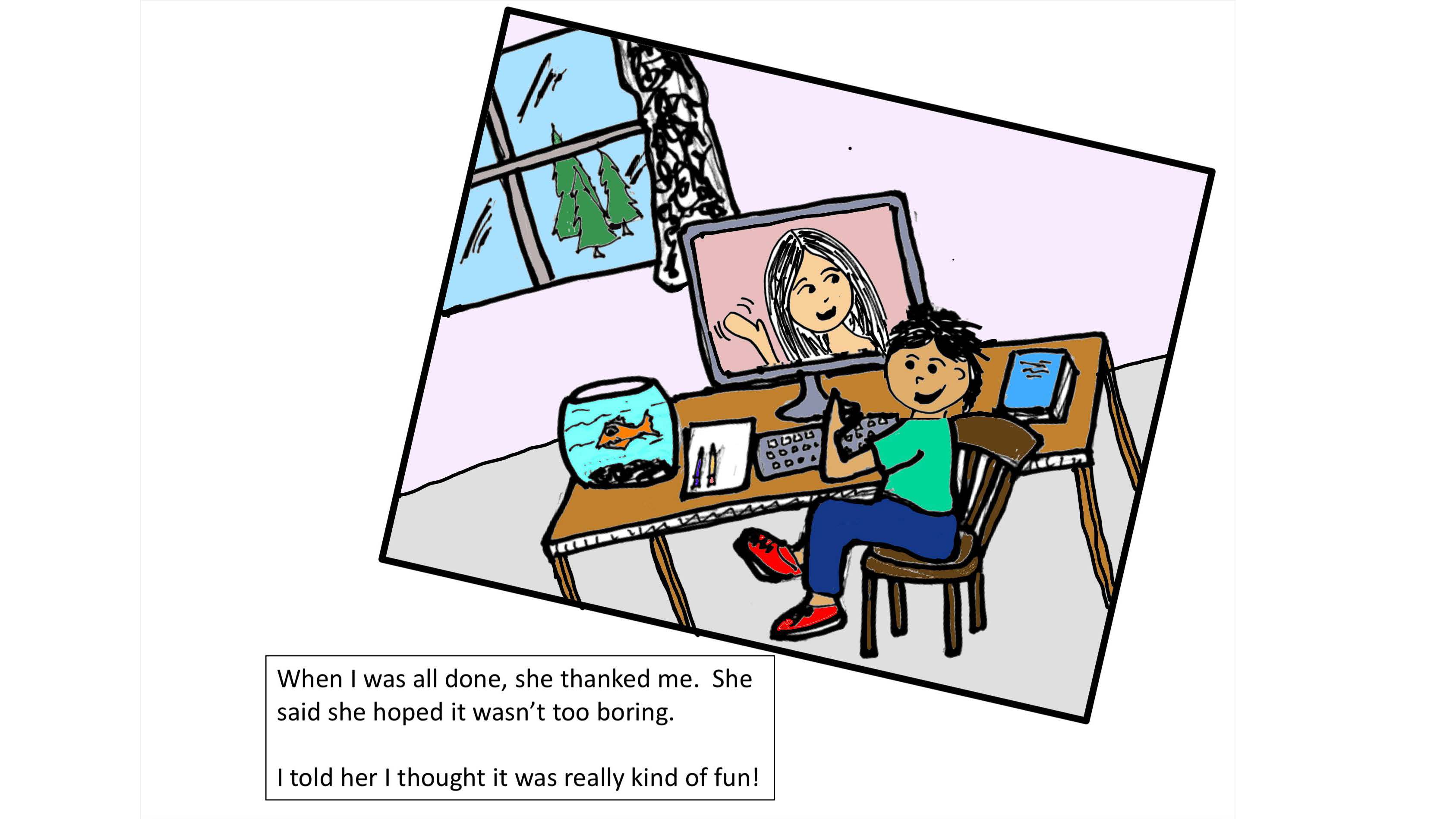
When I was all done, she thanked me. She said she hoped it wasn’t too boring. I told her I thought it was really kind of fun!
Story page 20 of 22
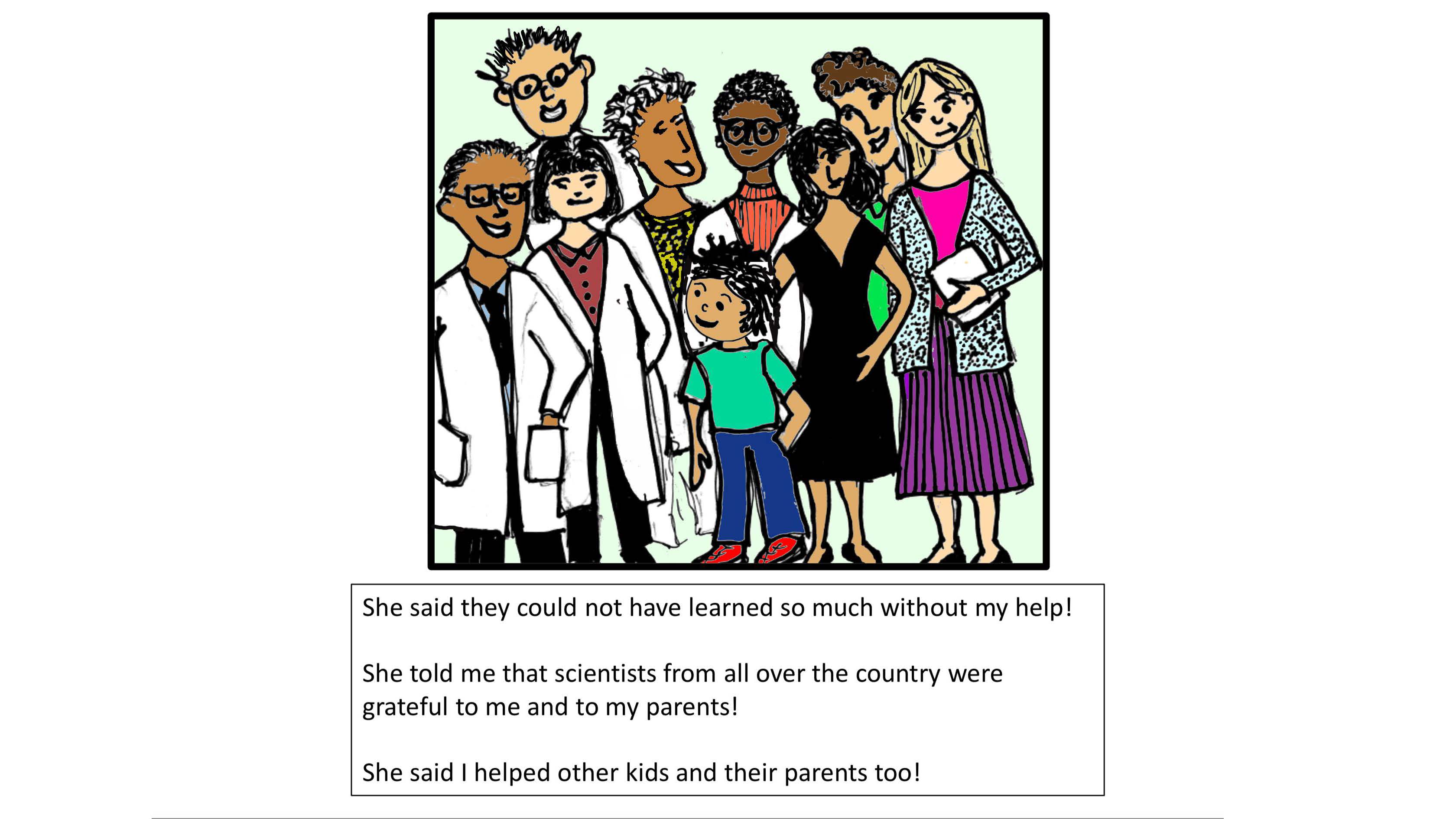
She said they could not have learned so much without my help! She told me that scientists from all over the country were grateful to me and to my parents! She said I helped other kids and their parents too!
Story page 21 of 22
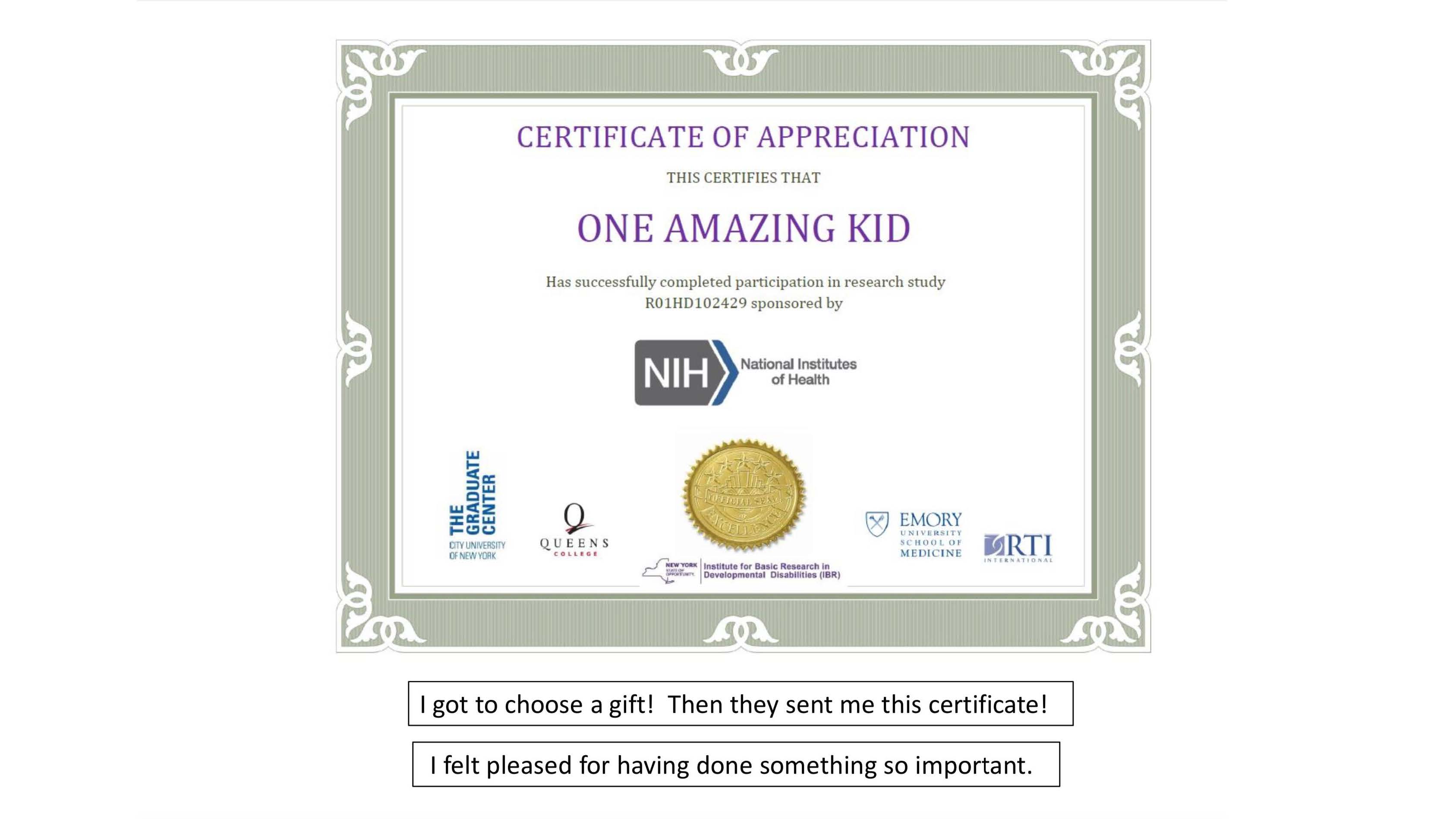
Certificate of Appreciation. This certifies that one amazing kid has successfully completed participation in research study R01HD102429, sponsored by Emory University School of Medicine and the Institute for Basic Research in Developmental Disabilities (IBR). I got to choose a gift! Then they sent me this certificate! I felt pleased for having done something so important.
Story page 22 of 22
The End.